Residential Lightning Protection Systems Done Right
As a professional lightning protection system company HG Lightning Protection designs lightning protection systems in accordance with the strictest standards and specifications.
Our lightning protection system design ensures you have the right infrastructure in place to protect your family, home, property, and equipment. We have a proven record of designing lightning protection systems that protect against structural damage to residential homes, and failure of internal systems and equipment.
The proper implementation of a lightning protection system includes knowledge, craftsmanship, and experience.
Failure to design a proper lightning system makes it ineffective. A lightning protection system is designed to create a direct path for the lightning charge to the ground. The system acts at the point where the lightning strikes, keeping the structure of the home and its occupants safe.
The experienced engineers at HG Lightning Protection will create a perfect design to protect your family and home from lightning.
Here are some types of lightning protection systems that can be designed:
Concealed: a fully concealed system can only be installed during the building of a new house. The cable and connections are made in the walls and attic. The only thing visible is the lightning rods.
Partially concealed: a partially concealed system can sometimes be installed on an existing house that has enough access and attic space to run the cable. For this type of installation the down conductors will be exposed from the soffit to the ground.
Exposed: a fully exposed system will have cable and lightning rods on the roof. The cable will be run behind the ridges and hips to be hidden as much as possible. The down conductors can be run behind gutter downspouts for less visibility.
What does a lightning protection system consist of?
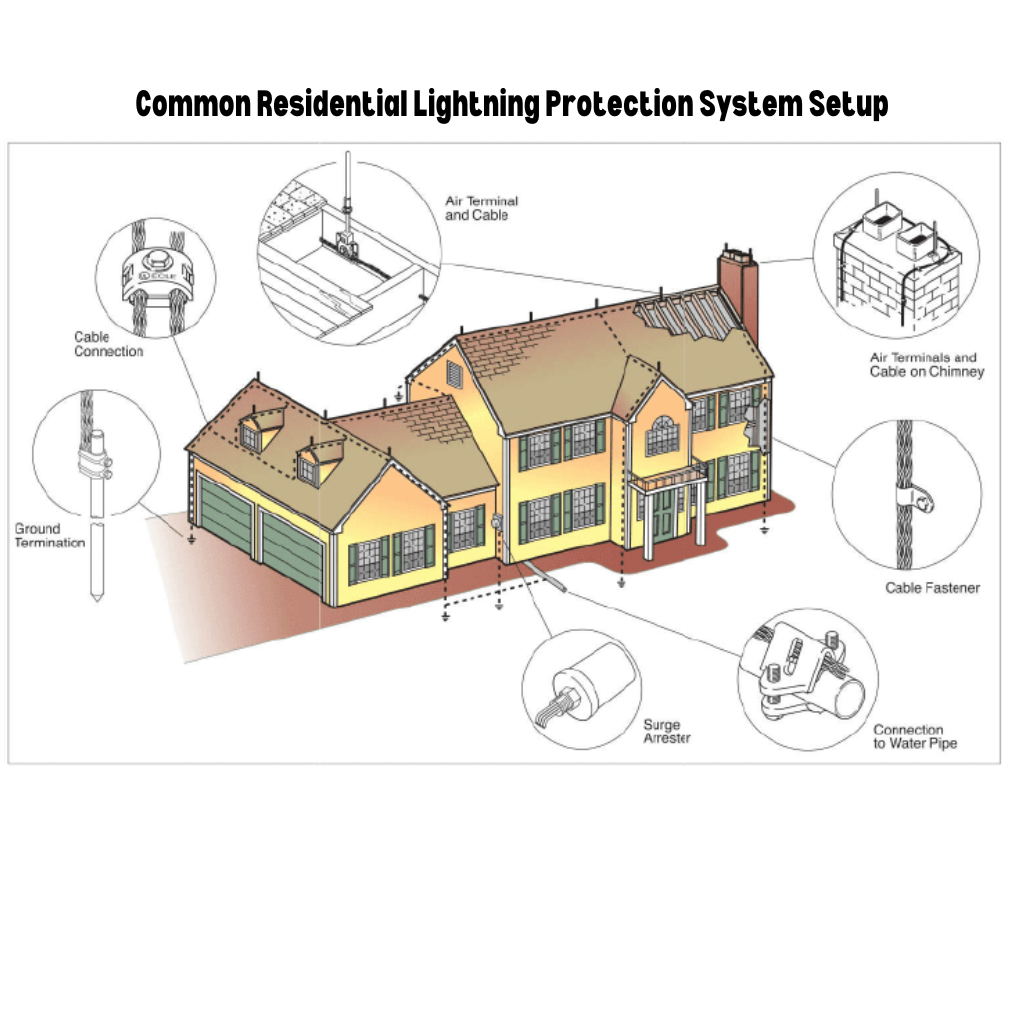
A lightning protection system includes a network of air terminals, bonding conductors, and ground electrodes designed to provide a low-impedance path to the ground for potential strikes.
The dissipation of a lightning strike requires correct system design, installation in accordance with UL 96A, NFPA 780 and all listed components correctly installed and connected to earth. The installation must be designed to protect the entire structure not just a small portion or section of the structure.
The main attribute common to all lightning rods is that they are all made of conductive materials, such as copper and aluminum. Copper and its alloys are the most common materials used in lightning protection.
A well-designed, properly installed Lightning protection system mitigates the fire hazard that lightning strikes pose to homes.
A lightning protection system provides a low-impedance path for the lightning current to lessen the heating effect of current flowing through flammable structural materials. If lightning travels through porous and water-saturated materials, these materials may literally explode if their water content is flashed to steam by heat produced from the high current. This is why trees are often shattered by lightning strikes.